

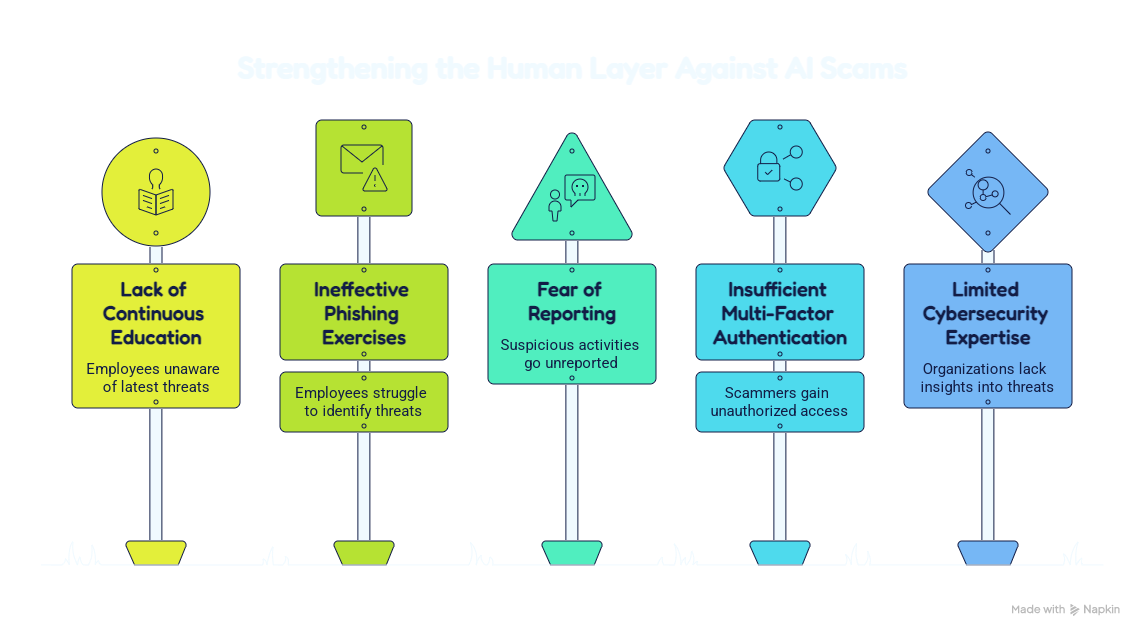
In an era where artificial intelligence (AI) is becoming increasingly sophisticated, the landscape of cybersecurity is evolving. This document explores the alarming rise of AI-driven scams and the subsequent shift in security focus towards the human layer. As technology advances, so do the tactics employed by cybercriminals, making it imperative for organizations to prioritize human-centric security measures.
The Rise of AI Scams
AI scams have surged in recent years, leveraging advanced algorithms and machine learning techniques to deceive individuals and organizations. These scams can take various forms, including phishing emails, deepfake videos, and automated voice calls that mimic real individuals. The ability of AI to generate convincing content has made it easier for scammers to exploit vulnerabilities in human judgment.
Types of AI Scams
-
Phishing Attacks: AI can generate highly personalized phishing emails that are difficult to distinguish from legitimate communications. By analyzing data from social media and other online sources, scammers can craft messages that resonate with their targets.
-
Deepfakes: The use of deepfake technology allows scammers to create realistic videos or audio recordings of individuals, often to impersonate executives or trusted figures. This can lead to unauthorized transactions or the dissemination of false information.
-
Automated Voice Scams: AI-driven voice synthesis can produce convincing phone calls that impersonate legitimate entities, such as banks or government agencies, tricking individuals into providing sensitive information.
The Human Layer in Cybersecurity
As AI scams become more prevalent, the focus of cybersecurity is shifting towards the human layer. This shift recognizes that technology alone cannot prevent all cyber threats; human behavior plays a crucial role in maintaining security.
Importance of Human-Centric Security
-
Awareness and Training: Organizations must invest in regular training programs to educate employees about the latest scams and how to recognize them. Awareness is the first line of defense against AI-driven attacks.
-
Behavioral Analysis: Understanding employee behavior can help organizations identify potential vulnerabilities. By monitoring patterns and anomalies, companies can detect suspicious activities before they escalate.
-
Psychological Factors: Scammers often exploit psychological triggers, such as urgency or fear. Training programs should address these tactics, helping individuals recognize when they are being manipulated.
Strategies for Enhancing Human Layer Security
To effectively combat AI scams, organizations can implement several strategies focused on the human layer:
1. Continuous Education
Regular workshops and training sessions can keep employees informed about the latest threats and best practices. Incorporating real-life examples of AI scams can make the training more relatable and impactful.
2. Simulated Phishing Exercises
Conducting simulated phishing attacks can help employees practice identifying and responding to potential threats. These exercises can provide valuable feedback and reinforce learning.
3. Foster a Culture of Reporting
Encouraging employees to report suspicious activities without fear of repercussions can help organizations respond quickly to potential threats. A transparent reporting culture can lead to faster identification and mitigation of scams.
4. Implement Multi-Factor Authentication (MFA)
While the human layer is crucial, technology still plays a significant role in cybersecurity. Implementing MFA can add an additional layer of security, making it more difficult for scammers to gain unauthorized access.
5. Collaborate with Cybersecurity Experts
Partnering with cybersecurity firms can provide organizations with insights into emerging threats and effective countermeasures. These experts can offer tailored training and support to enhance the human layer of security.
The Role of Technology in Supporting Human Security
While the focus is shifting to the human layer, technology remains an essential component of a comprehensive security strategy. AI can be harnessed to enhance security measures rather than solely being a tool for scammers.
AI-Powered Security Solutions
-
Threat Detection: AI can analyze vast amounts of data to identify patterns indicative of potential scams. By leveraging machine learning algorithms, organizations can detect anomalies and respond proactively.
-
User Behavior Analytics: AI can monitor user behavior to establish baselines and identify deviations that may signal a security threat. This can help organizations respond quickly to suspicious activities.
-
Automated Incident Response: AI can assist in automating responses to certain types of threats, allowing organizations to mitigate risks more efficiently.
Conclusion
As AI scams continue to rise, the need for a human-centric approach to cybersecurity has never been more critical. Organizations must prioritize training, awareness, and behavioral analysis to empower employees as the first line of defense against these sophisticated threats. By combining human vigilance with advanced technology, businesses can create a robust security posture that effectively addresses the challenges posed by AI-driven scams. The future of cybersecurity lies in recognizing that while technology is a powerful ally, the human element remains indispensable in the fight against cybercrime.