

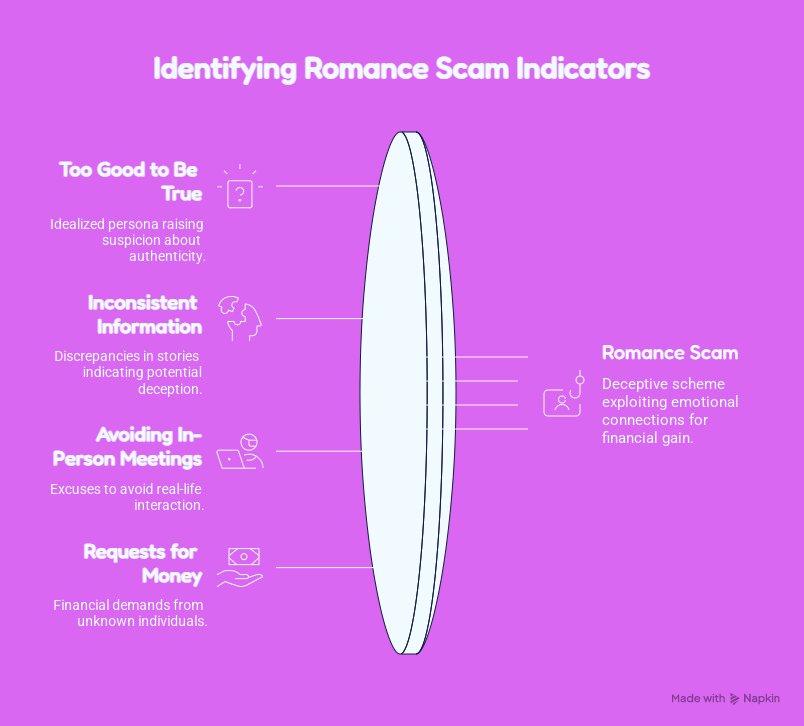
Romance scams have become increasingly prevalent in the digital age, targeting individuals seeking love and companionship online. These scams often involve con artists who create fake profiles on dating sites and social media, luring victims into emotional relationships before exploiting them financially. This document outlines practical steps you can take to safeguard yourself against these deceptive schemes.
Understanding Romance Scams
Romance scams typically follow a similar pattern:
-
Initial Contact: Scammers create fake profiles using stolen photos and fabricated personal information to attract victims.
-
Building Trust: They engage in lengthy conversations, often sharing fake stories to build emotional connections.
-
The Ask: Once trust is established, they will request money for various reasons, such as medical emergencies, travel expenses, or legal issues.
Recognizing these stages can help you identify potential scams early on.
Signs of a Romance Scam
Being aware of the common signs of romance scams can help you stay vigilant:
-
Too Good to Be True: If someone seems perfect or overly idealized, it’s worth questioning their authenticity.
-
Inconsistent Information: Pay attention to discrepancies in their stories or details about their life.
-
Avoiding In-Person Meetings: Scammers often make excuses to avoid meeting in person or video chatting.
-
Requests for Money: Be cautious if someone you’ve never met asks for financial help.
Steps to Protect Yourself
1. Verify Profiles
Before engaging with someone online, take the time to verify their profile:
-
Reverse Image Search: Use tools like Google Images to check if their profile pictures appear elsewhere on the internet.
-
Check Social Media: Look for their presence on other platforms. A lack of activity or friends can be a red flag.
2. Keep Personal Information Private
Be cautious about sharing personal details:
-
Limit Information: Avoid sharing sensitive information such as your address, financial details, or personal identification numbers.
-
Be Wary of Emotional Manipulation: Scammers often use emotional tactics to extract personal information. Stay grounded and skeptical.
3. Communicate Safely
Use secure communication methods:
-
Use Dating Platforms: Communicate through the dating site or app rather than giving out your personal phone number or email.
-
Video Chat: Suggest a video call to verify their identity. Scammers often avoid this step.
4. Trust Your Instincts
If something feels off, it probably is:
-
Listen to Your Gut: If you feel pressured or uncomfortable, take a step back.
-
Seek Advice: Talk to friends or family about your online relationship. They can provide an objective perspective.
5. Research Their Claims
If your online partner shares stories that seem unusual or extravagant, do some research:
-
Fact-Check: Look up any claims they make about their job, location, or life events.
-
Ask Questions: Don’t hesitate to ask for clarification on any inconsistencies.
6. Be Cautious with Money
Never send money to someone you haven’t met in person:
-
Avoid Financial Transactions: Be wary of requests for money, even if they seem legitimate.
-
Use Trusted Payment Methods: If you must send money, use secure and traceable methods, but only if you are absolutely certain of the recipient’s identity.
7. Report Suspicious Activity
If you suspect you are dealing with a scammer:
-
Report the Profile: Most dating platforms have mechanisms to report suspicious users.
-
Notify Authorities: If you’ve been scammed, report it to local law enforcement and organizations like the Federal Trade Commission (FTC) or the Internet Crime Complaint Center (IC3).
Conclusion
Romance scams can have devastating emotional and financial consequences. By staying informed and vigilant, you can protect yourself from becoming a victim. Always prioritize your safety and trust your instincts when navigating the world of online dating. Remember, genuine relationships are built on trust and transparency, so take the necessary precautions to ensure your online interactions are safe and secure.
