
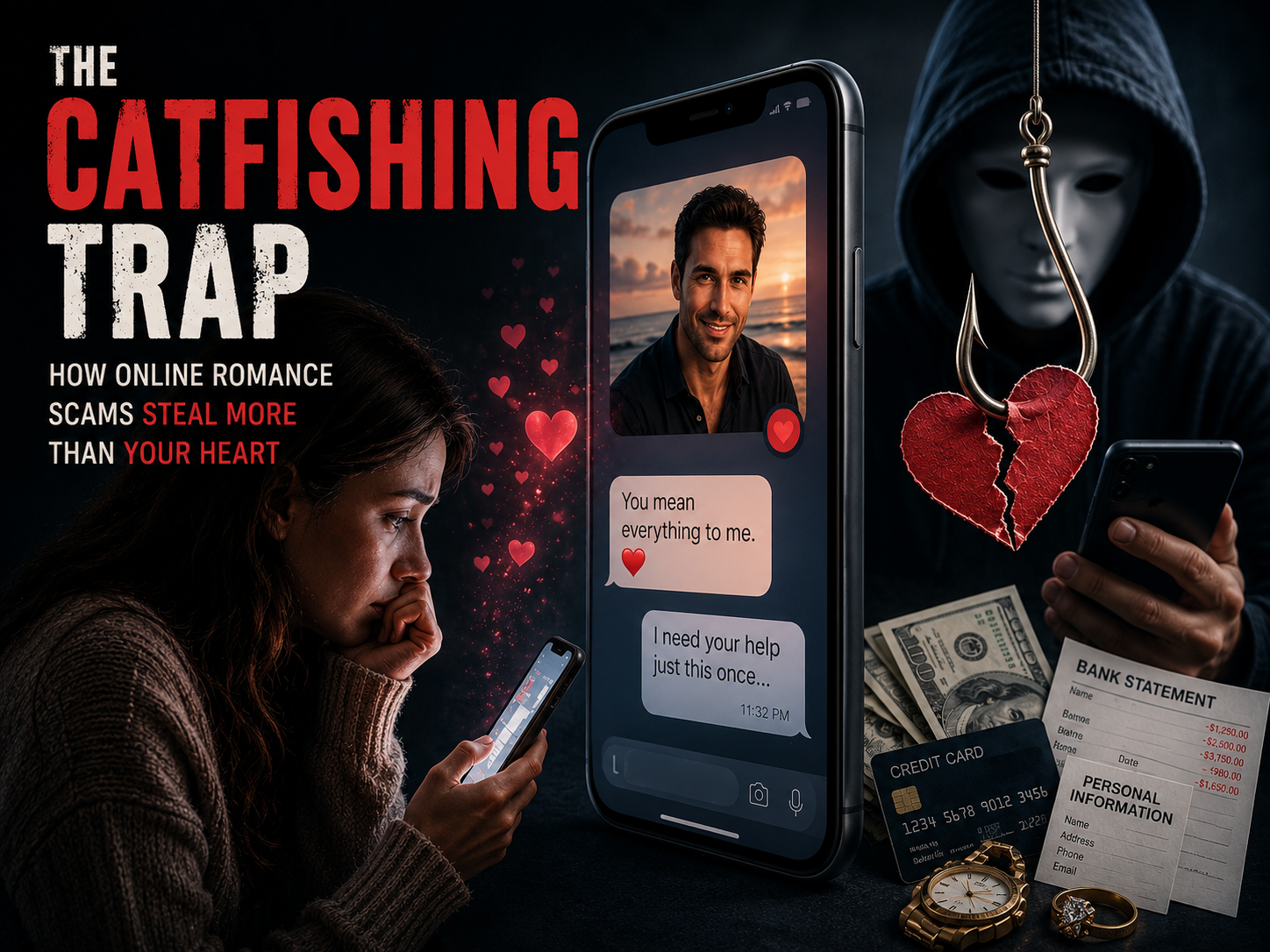
You match with someone online. Their photos are stunning, their messages are warm, and within days they feel like the person you’ve been waiting for. This is exactly how catfishing scams are designed to work.
What Is Catfishing?
Catfishing happens when someone creates a fake online identity — often using stolen photos and a fabricated backstory — to build a relationship with a target. While some catfish simply want attention or companionship, many are running deliberate financial scams, sometimes as part of organized crime networks.
How the Scam Unfolds
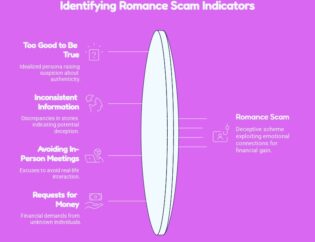
The pattern is remarkably consistent. Scammers build trust slowly, showering their target with affection and constant communication. They avoid video calls, citing poor internet, a broken camera, or work commitments overseas. Once emotional trust is established, the ask begins — a medical emergency, a stuck shipment, travel funds to finally meet in person, or an “investment opportunity” (often cryptocurrency). Requests usually start small and escalate.
Red Flags to Watch For
- They profess love or deep affection very quickly
- They always have an excuse to avoid video calls or meeting in person
- Their photos look professionally shot or inconsistent across platforms
- They claim to be working abroad, in the military, or on an oil rig
- They eventually ask for money, gift cards, or crypto
Protecting Yourself
Reverse image search their photos, insist on video calls early, and never send money to someone you haven’t met in person. Talk to a trusted friend about the relationship — outside perspective often spots warning signs you can’t see when you’re emotionally invested.
If You’ve Been Targeted
You’re not foolish — these scams are engineered by people who study human psychology. Cut off contact, report the profile to the platform, and if money was involved, report it to your bank and local authorities.